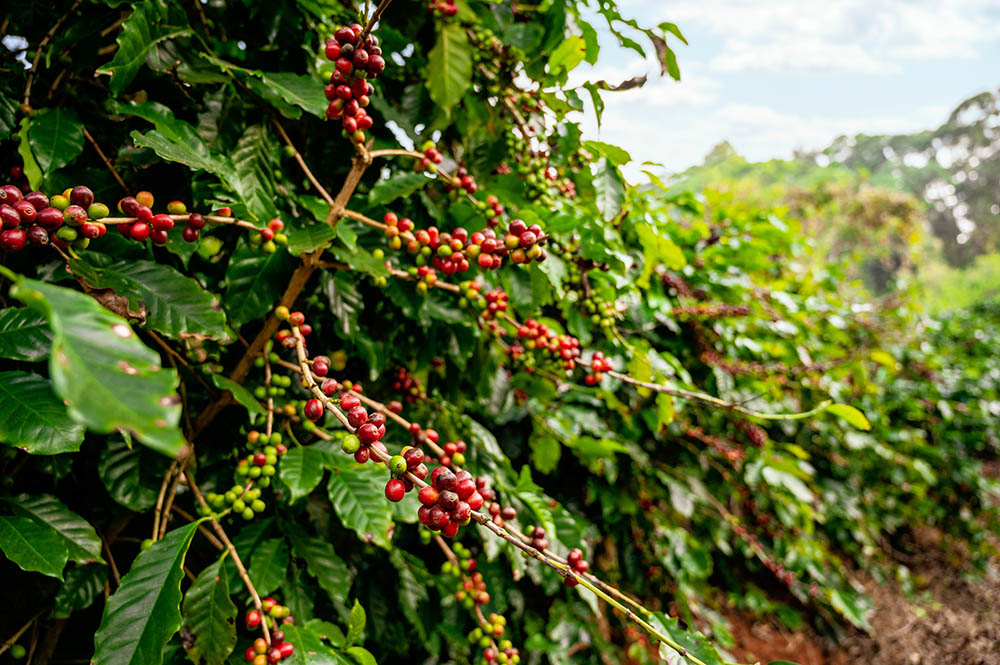
Where Kona Coffee Grows
Kona coffee comes from a narrow strip of land on the western side of Hawaii’s Big Island. This area sits on the slopes of two large volcanoes, Hualalai and Mauna Loa, and farmers often call it the Kona coffee belt. The belt is only a few miles wide and runs for about 20 miles, which means the total growing area is very small compared to other coffee regions around the world. That small size is one reason real Kona coffee is harder to find and costs more than most grocery store brands.
The land here does something special for coffee plants. Mornings are bright and sunny, afternoons bring soft clouds and gentle rain, and the nights stay mild. This daily rhythm gives the coffee cherries a long and even growing season. The volcanic soil drains well and is packed with minerals, which feeds the plants in a way that flat farmland simply cannot copy.
What Makes the Flavor Special
Most Kona coffee is grown from arabica plants, which are known for a smoother and less bitter taste than other types. Combine that with the rich soil and the mild weather, and you get a cup that many people describe as clean, balanced, and a little sweet. You will often notice soft notes of nuts, brown sugar, and even hints of fruit, without the sharp or burnt edge that cheaper coffee can have.
The way the coffee is picked matters too. On many Kona farms, the cherries are picked by hand because the steep slopes make machines hard to use. Hand picking lets farmers choose only the ripe cherries, which keeps the quality high. All of this care adds up to a coffee that tastes gentle and full at the same time.
How to Spot Real Kona Coffee
This is where many shoppers get fooled. A bag can say Kona on the front and still hold very little Kona coffee inside. In Hawaii, a product labeled as a Kona blend only needs to contain 10 percent real Kona beans. The other 90 percent can come from anywhere. If you want the true experience, look for the words 100 percent Kona coffee on the label.
- Look for the exact phrase 100 percent Kona, not just the word Kona or Kona blend.
- Check that the bag names the farm or the Kona district where the beans were grown.
- Be careful with prices that seem too low, since real Kona is rarely cheap.
Brewing Kona at Home
Good beans deserve a good cup. Kona coffee shines when you treat it gently, so avoid burning it with water that is too hot or a roast that is too dark. A medium roast lets the natural sweetness come through. Grind the beans right before you brew, use clean filtered water, and try a pour over or a simple drip method to taste the coffee at its best. Because the flavor is already smooth, many people enjoy Kona black, with no need for sugar or heavy cream.
A Cup Worth the Trip
Kona coffee is more than a fancy label. It is the result of a rare place where volcanoes, weather, and careful farmers all work together. The next time you pour a cup of true 100 percent Kona, you are tasting a small corner of Hawaii that the rest of the world cannot grow. That is what makes it some of the best coffee you will ever drink.