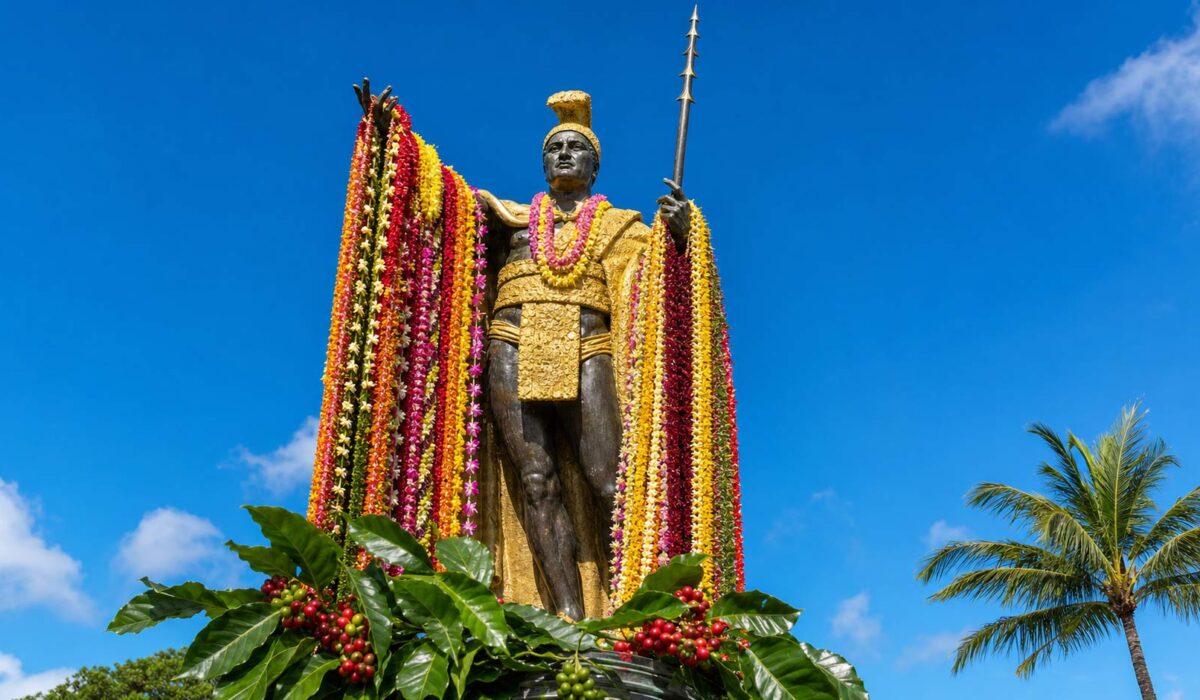
The Coffee Story Starts With a King
When we sip a smooth cup of Kona coffee today, it is easy to forget how far back the story goes. The earliest chapter of Hawaiian coffee is tied to King Kamehameha I, the ruler who brought all the Hawaiian Islands together under one crown in the early 1800s. He was a powerful leader who welcomed new ideas, new crops, and trusted advisors from far away. One of those advisors would end up planting the very first coffee in the islands. So while King Kamehameha Day honors the king himself, it also marks the rough beginning of a coffee tradition that would one day make Hawaii famous.
It is important to be honest about the timeline. King Kamehameha I did not grow Kona coffee, and he likely never tasted the polished cup we enjoy now. What happened during his reign was the planting of the first seeds, the spark that everything else grew from. The famous Kona coffee industry came together after his lifetime, but the roots were set while he ruled.
Who Was Don Francisco de Paula Marin
The man at the center of this early story was Don Francisco de Paula Marin, a Spanish born settler who became one of King Kamehameha’s most trusted helpers. Marin wore many hats at the royal court. He served as an interpreter, a bookkeeper, and even a kind of personal doctor to the king. He is often remembered as one of Hawaii’s first true farmers because he loved to experiment with plants from around the world.
Marin was a natural horticulturist, which simply means a person skilled at growing fruits, vegetables, and other plants. He kept detailed journals about what he planted and when. Around the early 1810s, his notes mention putting coffee in the ground on Oahu near Honolulu. That makes him the person credited with planting the first coffee in the Hawaiian Islands. He also introduced other now familiar crops to Hawaii, which is why his name comes up so often when people talk about the islands’ farming history.
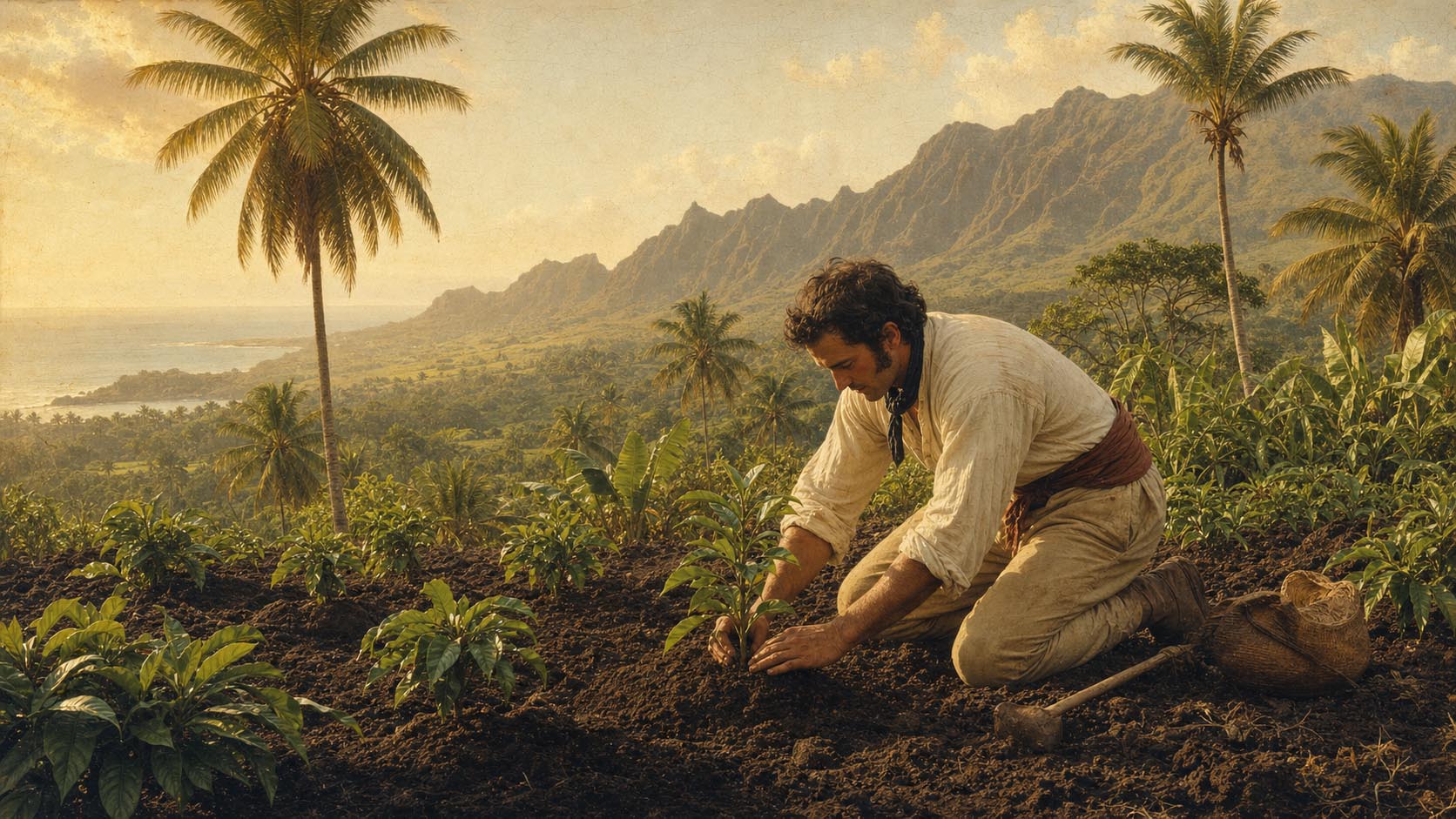
Why the First Coffee Did Not Take Off
Planting the first coffee and building a coffee industry are two very different things. Marin’s early coffee plants did not turn into a thriving farm. The records are thin, and those first trees seem to have faded without much success. Growing coffee well takes the right elevation, the right rainfall, and soil that suits the plant, and the first plantings simply were not in the perfect spot.
A bit later, more coffee cuttings arrived in the islands. In the 1820s, a Hawaiian chief named Boki brought back coffee plants from his travels and had them planted in Manoa Valley on Oahu. These plants did better than Marin’s first attempt, and they became an important source of cuttings that would soon travel to other parts of the islands. The early days of Hawaiian coffee were really a series of hopeful tries, with each one teaching growers a little more about where the plant liked to live.
How Kona Coffee Finally Took Root
The real turning point came in 1828, on the western slopes of the Big Island. A missionary named Samuel Ruggles carried coffee cuttings to the Kona district and planted them near the Kealakekua area. This time, the match was perfect. The rich volcanic soil, the warm sunny mornings, the gentle afternoon clouds, and the cool evenings gave the coffee exactly what it needed to flourish. Those Kona plants thrived in a way the earlier ones never had, and that success is what eventually grew into the world famous Kona coffee region.
Notice the date. King Kamehameha I had already passed away by the time coffee took hold in Kona. So while the king’s era gave Hawaiian coffee its very first seeds through Marin, the Kona coffee we celebrate today became established in the years that followed. The honest version of the story is part of what makes it special. It took a king’s open court, a curious advisor, a traveling chief, and a determined missionary, spread across more than a decade, to turn a few seedlings into a lasting tradition.
Why King Kamehameha Day Still Matters to Coffee Lovers
King Kamehameha Day has been celebrated every June 11 since 1871, when King Kamehameha V created the holiday to honor his great ancestor. People mark the day with parades, draping long flower lei over the king’s statues, and remembering the leader who shaped modern Hawaii. For coffee fans, it is also a fitting moment to raise a mug and think about how far the islands’ coffee has come.
The story reminds us that Hawaiian coffee was never an accident. It grew out of curiosity, patience, and a willingness to try again after the first plants failed. That same spirit lives on in the Kona farmers who hand pick their cherries today. A few simple reasons make this history worth remembering.
- It connects your morning cup to one of the most important figures in Hawaiian history.
- It shows that the islands’ best coffee came from years of trial, not instant success.
- It honors the farmers and advisors who kept planting until the coffee found its home.
Raising a Cup on King Kamehameha Day
The next time King Kamehameha Day rolls around, you can enjoy your coffee with a little extra meaning. The first seeds were planted during the king’s era by his trusted advisor, the plants struggled, and the perfect home for Kona coffee was found only after his lifetime. From a royal court on Oahu to the sunny slopes of Kona, Hawaiian coffee carries a story of persistence that is well worth toasting. So pour a cup of real Kona, think of the king who united the islands, and enjoy a tradition that started with him.